
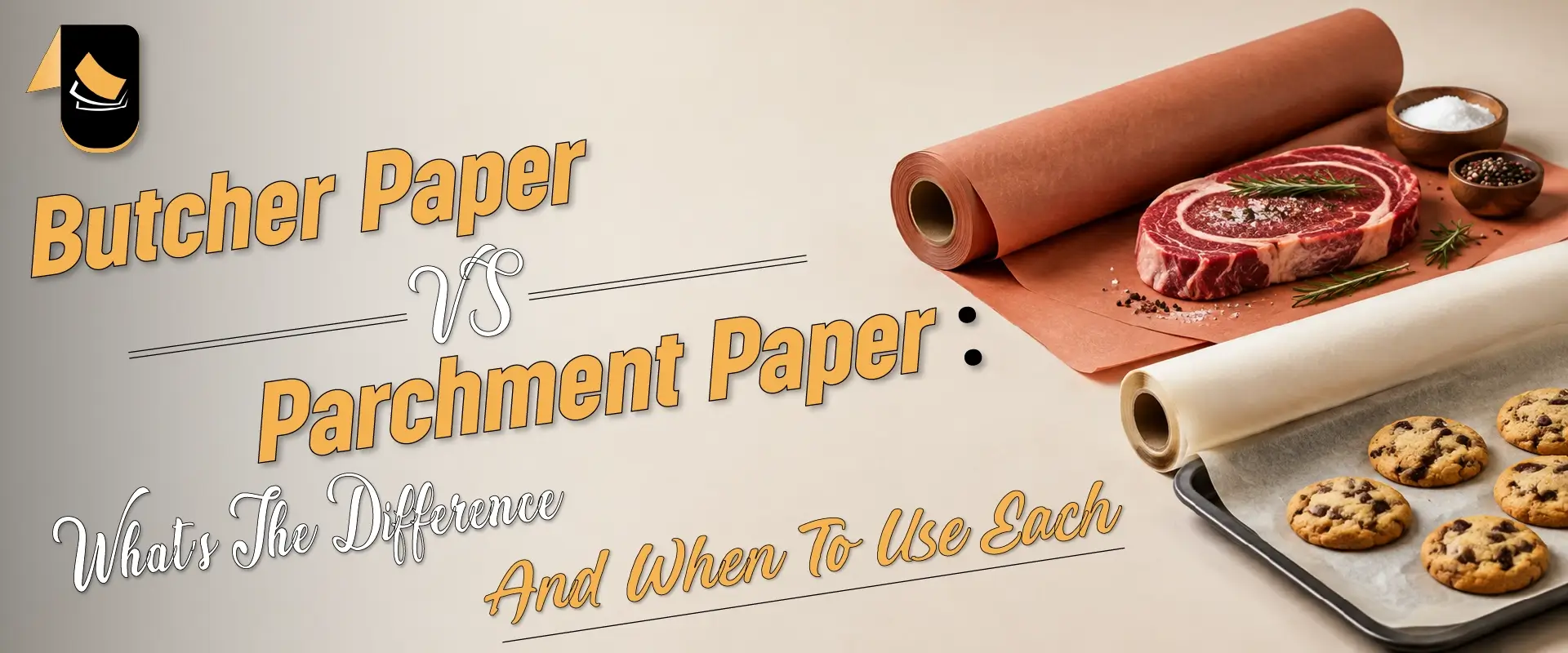
Butcher Paper vs Parchment Paper: What’s The Difference And When To Use Each
When you are working in a kitchen, whether you are preparing for a professional dinner party or baking for your family, choosing the right paper is key in the kitchen. Among tools, butcher paper and parchment paper are commonly misunderstood. When comparing these, it is important to understand their similar appearance. These papers look the same but have different properties that can make a major difference in your cooking and baking process.
In this comprehensive guide, you will learn what butcher paper is and how it’s different from parchment paper. So let’s go into the blog and learn the difference between these papers for better use.
What Is Butcher Paper?
Wondering where butcher paper got the name butcher? Custom Butcher paper is a thick and durable paper that is mainly used for wrapping fresh meat at butcher shops and delis. It’s a rough and heavy-duty kraft paper that is made with wood pulp.
Unlike ordinary paper, this wrapping paper is handled to maintain its strength and resistance to tearing even when it is fully saturated with moisture, blood, or grease. The characteristics of this paper make it perfect for smoking and barbecuing. It comes in various colours. Dyed and bleached butcher papers are valued for their aesthetics and flexibility in food preparation and storage.
Types Of Butcher Paper
Butcher paper comes in different types according to its properties and uses. Here are the different varieties of these papers that you can use according to your requirements. Also, these papers come in different thicknesses and sizes that help to make your cooking memorable.
White butcher paper
White bleach paper is unbleached kraft paper that is bleached white. This paper is normally used by sandwich shops, delis, and butcher shops to wrap fresh meat, fish, and sandwiches. It is usually coated with a size to provide short-lived moisture resistance.
Peach butcher paper
This paper is extremely popular for barbecue. It allows the smoke to penetrate food while retaining moisture. Unlike foil paper, this paper is breathable and prevents the meat from getting soggy.
Gardenia butcher paper
This is a premium, high-density paper that is treated with a special moisture barrier. A food paper is featured with a distinctive greenish-tinted coating that prevents the juices from leaking and makes it ideal for storing high-moisture meat and seafood.
Wax-coated butcher paper
This butcher paper is featured with a thin layer of wax on one side. The paper is mostly used for maximum moisture and leak protection. It is mostly used for lining the basket or covering wet meat. However, wax-coated paper cannot be used under heat because the wax melts easily.
Steak paper
This paper is normally sold in black, green, or peach colours. This dense paper is widely used for displaying fresh meat in a butcher case. It resists blood and juice saturation, keeps the meat fresh, and prevents the food from discolouring.
Common Uses Of Butcher Papers
Butcher paper is a heavy-duty kraft-style paper that is manufactured to withstand blood and moisture. This makes it versatile in culinary, commercial, and arts and crafts. This paper is originally made to keep meat fresh in storage or during cooking. Here are some common uses of this paper:
- Wrapping the meat
- Bbq smoking
- Low-temperature cooking
- Surface protection
- Table runner and placemats
Manufacturing Of Butcher Paper
The production of this paper is different from that of parchment paper. Butcher paper is made with different coatings and chemicals. This wrapping paper is made with durable, high-end, and food-safe material. Here is a brief description of this paper manufacturing process.
Raw material selection:
The production process starts with selecting premium wooden pulp. Manufacturers mostly avoid recycled pulp for valuable food-grade paper to eliminate any exposure to chemicals.
Internal chemical treatment:
The defining step in butcher paper happens when the wood fibre is still a liquid slurry. Manufacturers introduce a specialised chemical sizing agent and wet strength resin into the mixture.
Forming:
The fibre mixture is pumped onto a high-speed paper-making machine. The liquid mixture is constantly divided onto a moving wire mesh or fabric screen, where the suction box extracts most of the water, forming a soft pulp mat.
Drying and calendering:
The damp paper passes through the heavy steam-heated pinch roller at high temperature to squeeze out remaining humidity and dry the material. Once the material is dry, the paper runs through a series of polished steel rollers known as calendering.
What Is Parchment Paper?
Parchment paper is also recognized as baking paper. It’s a good-grade paper that is coated with a thin layer of silicone. This paper is normally used for baking and cooking in the kitchen because of its non-sticky and heat-resistant properties. Parchment paper is a kitchen-friendly paper. The coating of the paper allows it to withstand high temperatures. Parchment paper is sold in white and brown ivory forms and comes in rolls or in specific shapes like circles and rectangles.
Contrast Between Butcher Paper And Parchment Paper
The difference between parchment paper and butcher paper depends on the coating and breathability of the paper. This decides how they will handle the heat and moisture in the kitchen. Butcher paper is coating-free and highly air-permeable, which allows the steam to escape to prevent the meat from getting sloppy. The parchment is coated with food-safe silicone that makes the paper non-stick. This leads to baking and roasting.
| Feature | Parchment paper | Butcher paper |
| Primary use | Baking cookies. Fried vegetables | Wrapping, smoking and resting the meat |
| Coating | Coated with food-safe silicone | Uncoated raw kraft brown paper |
| Surface properties | Completely non-stick and grease-resistant | Textured. Food can stick to it |
| Breathability | Low; traps the steam and moisture | Lets the steam escape while keeping the juices inside |
| Heat limit | High heat. | Indirect low and slow heat |
Coating Used On These Custom Food Papers
Custom parchment paper and butcher paper have different types of coating to achieve different levels of heat and moisture resistance. So, here are different types of coatings that are used for these food papers to make them a friendly tool for the kitchen.
Custom parchment paper
Custom parchment paper is chemically treated with an acid bath during the manufacturing process to break down its fibres and create a double-layer, heat-resistant paper base.
The coating: The layer that is used on parchment paper is silicone-based.
How it works: This layer is applied to both sides of the paper. It acts as the built-in sizing agent that creates a waterproof and highly water-resistant surface.
Custom butcher paper
Standard butcher paper is completely uncoated paper. Rather than being coated, it is treated with a starch-based sizing agent. This treatment keeps the paper breathable so the steam can escape.
However, custom food papers have been ordered under the general umbrella of butcher paper and are mostly used and specialised with coatings that depend on their commercial functions.
- Wax coating
- Polythene coating
- PLA coating
Choose The Right Paper
Choosing the right paper depends on the purpose for which you want to use these papers. If you want to do baking, cooking, or roasting veggies, then go for the parchment paper because it is best for oven heat and is non-sticky; it also has heat-resistant properties. On the other hand, if you want to host a huge party and want to cook meat, then butcher paper wholesale is the best choice for grilling and smoking the meat. It helps to keep your meat juicy and tender. Choose the paper according to the purpose for which you want to use it.
Conclusion
At the end, butcher paper is uncoated paper, but parchment paper is coated wth food grade sillicon. Butcher paper with logo is normally used for wrapping meat and for barbecue or smoking the meat. But the printed parchment paper is normally used for baking and cooking.
If you want to get these papers for your daily use and for your business purposes, then you can get these custom papers from Custom Grease Paper at affordable prices. So get a quote and place your order now!