
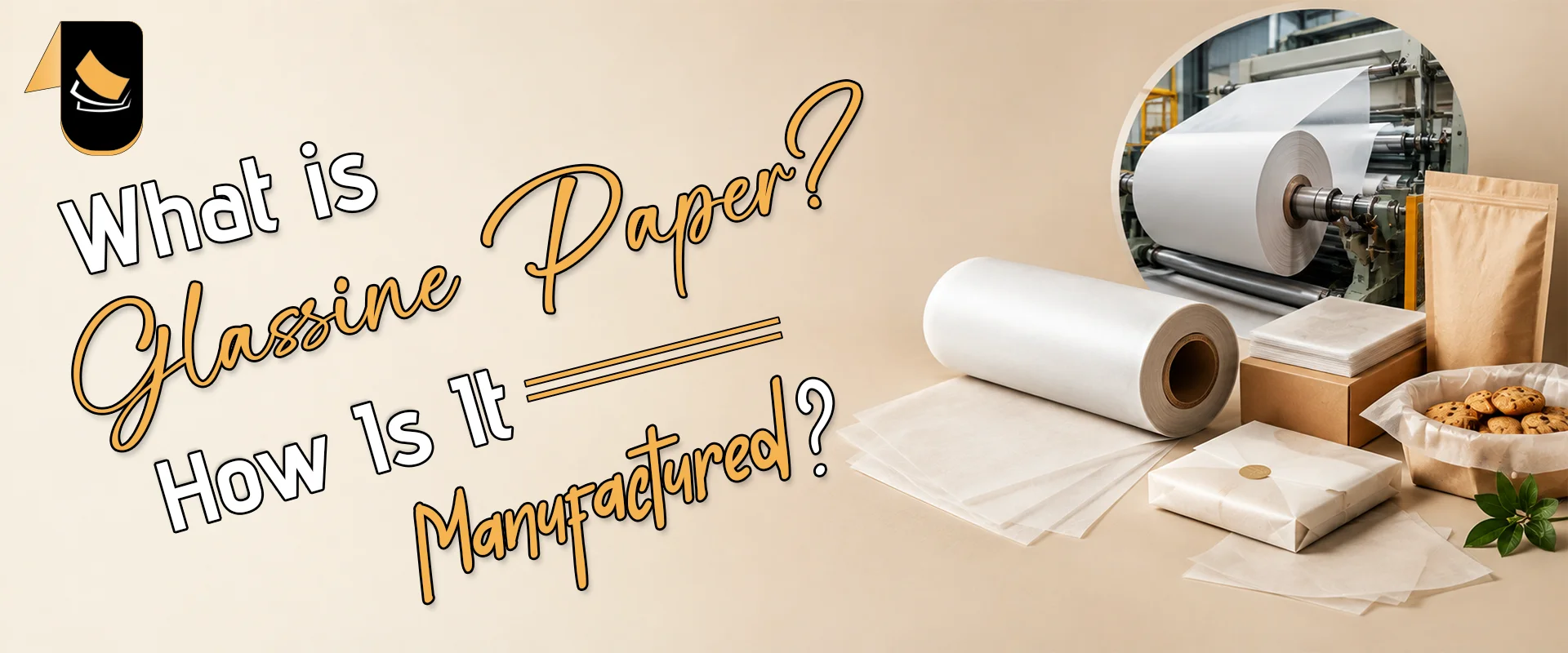
What Is Glassine Paper? How Is It Manufactured?
Packaging heroes don’t need bold printing to impress others. That’s right. Sometimes it is a semi-see-through and quiet paper protecting your product and bakery goodies. This paper spends decades working behind the scenes across all the fulfilment centres. And all without relying on any type of coating.
Many industries prefer recycled paper over plastic paper. Honestly! The big reason behind this is to meet consumers’ demand for eco-friendly products. Custom glassine paper is one of the most reliable packaging materials. It has also become popular in the packaging industry. Most people have the same two questions right away. What makes it unique, and how is it manufactured? We will cover these two questions deeply in our blog.
What Is Glassine Paper?
Glassine is a paper made from wood pulp. It is smooth and translucent, and much glossier than the paper you normally use. You can see through it a little bit. Light also passes through it, and you can easily figure out what’s inside the wrap. Even though it’s smooth and the best of all time. It is completely plastic-free, but the look might remind you of a plastic film.
- Durable packaging material
- Strong natural barrier against grease and moisture
- 100% eco-friendly & recyclable material
- Neat presentation with lightweight sheet
Real-World Applications Of Glassine Paper
As you know, glassine paper solves so many challenges without relying on plastic in the packaging industry. Now this custom wrapping paper is popular with many different groups and industries. The main reason is that it combines grease resistance, a clean look and 100% recyclability. Businesses across all kinds of industries rely on it every single day. Here are some popular and common applications of glassine paper:
- Food packaging
- Collectibles and stationery
- Art and archival storage
- Retail and industrial uses
Manufacturing Process Of Glassine Paper
Glassine paper has a smooth and shiny appearance, although it is not coated with any kind of plastic or coating. This translucent appearance is not because of any materials but due to the manufacturing process. Below are the steps in which wood is covered with a finish and becomes shiny paper.
Pulping
This process is about simply breaking down the wood into clean and usable fibre. The process starts with debarked wood chips. These chips are usually sourced from hardwood or softwood trees.
- Chemical Cooking: Wood chips that are sourced from trees are placed in large pressurised tanks and cooked in a chemical solution. Tanks are called digesters. The entire process softens and breaks down the wood structure.
- Taking out the glue: We have natural sticky stuff inside the wood. That stuff is called lignin, which holds fibres together. The paper will turn yellow and break easily over time if the glue stays in the paper. So factories wash it away. You will get clean fiber called cellulose after washing. It is considered the building block of good paper.
Refining and Beating
Refining is the main step where glassine paper starts to separate itself from other ordinary papers. It passes through beaters once the clean cellulose pulp is mixed with water. Factories handle fibres gently in regular paper making.
Because the finished paper stays fluffy and thick. The factories do the exact opposite for glassine paper. The fibres are heavily beaten and hydrated for an extended time. In results you get a dense and gel-like mixture. That smooth mixture eventually allows light to pass through the sheet.
Paper Drying
When the mixture of the pulp reaches the right consistency for manufacturing. The fiber passes through the papermaking machine. Fibres settle down into a paper after the water drains out of it. You will get a strong and dense paper after the paper passes through the heated drying cylinders. But that surface is still slightly dull and matte rather than glossy.
Supercalendering
An important step to get the signature glossy shine is supercalendering. This step provides a natural barrier against moisture and grease. A supercalender is a tall vertical stack of heavy rollers. Paper weaves through these rollers under immense pressure and heat. The paper naturally becomes grease-resistant and smooth after this process. This is all achieved without adding a single drop of plastic or wax coating.
Cooling and Slitting
The paper comes straight out of supercelender is hot and loses almost all of its moisture. To fix this, the sheet goes through a controlled cooling stage. This process turns paper into flexible, durable, and easy to fold or wrap.
- Sharp blades slice wide rolls into smaller widths.
- Teams check the final quality of the paper.
- They inspect every roll for smoothness and shine.
- Now the paper is ready to be packed for delivery.
How Is Glassine Paper Different From Other Papers
Glassine, parchment, and wax paper can look like the same paper at first glance. They are all smooth and semi-see-through. Have a look at how glassine paper is different from the standard papers available in the market for product packaging.
Glassine Paper VS Parchment Paper
Parchment paper uses a silicone coating to handle oven heat. This coating makes it hard to recycle. On the other hand, glassine paper has no coating at all, which makes it 100% recyclable.
Glassine Paper VS Wax Paper
Wax paper gets its moisture resistance from a wax coating that melts in heat. This process makes it difficult to recycle. Glassine relies purely on pressed fibre and makes it eco-friendly.
Conclusion
In this blog, we explore what glassine paper is and how it is manufactured in depth. From refining the wood to turning it into completely recyclable paper. The above guide on what glassine paper is can help you make an informed decision about your packaging. It is an eco-friendly and recyclable packaging material that is widely used by different industries.
Custom Greaseproof Paper manufactures eco-friendly glassine papers specifically tailored to your packaging needs and requirements. Contact us now to get a special discount and free shipping with fast turnaround.