
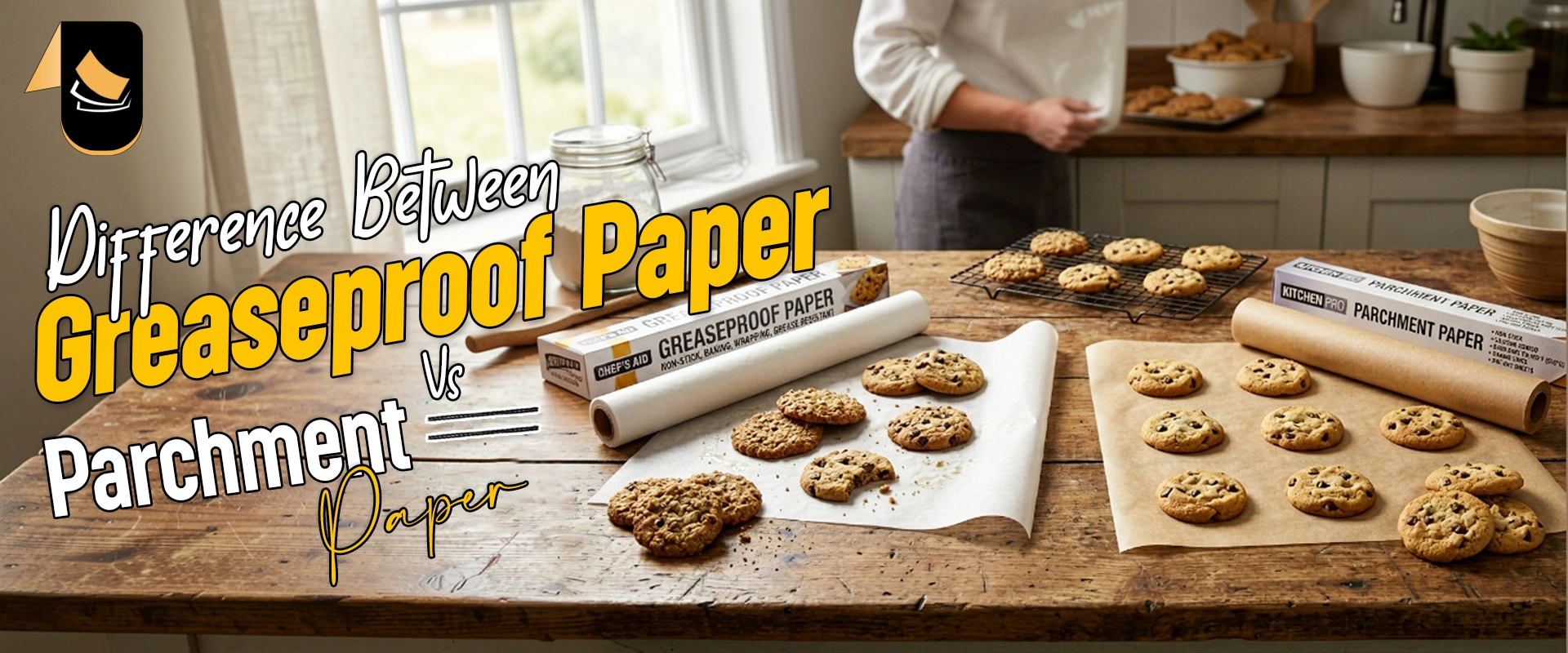
Difference Between Greaseproof Paper vs Parchment Paper
People often use the terms “parchment paper” and “greaseproof paper” interchangeably. But both of them have different purposes. You have seen these papers at the bakery store, baking kitchens, and food restaurants. They are easily lifted without creating any mess. The same is the case with the fast food restaurant that gives you your favorite smash burger or fully loaded wrap in paper, and the paper doesn’t let your hands get dirty. You might think that both papers are the same, but choosing the right paper here affects the business. Let’s see the basic difference between greaseproof paper and parchment paper and see how custom packaging is beneficial for your business.
Greaseproof paper VS. Parchment paper: Key differences
First, let’s discuss the core difference between the two papers. Then we will move towards the detailed differences.
| Main Feature | Parchment Paper | Greaseproof Paper |
|---|---|---|
| Main Coating | Silicone coating for superior non-stick performance. | No coating; grease resistance is achieved through dense paper fibers. |
| Non-Stick Performance | Highly non-stick, ideal for baking delicate foods. | Moderately non-stick, suitable for food wrapping and serving. |
| Heat Resistance | Oven-safe up to approximately 420–450°F (215–230°C). | Very low heat resistance; not recommended for oven use. |
| Best Uses | Baking, lining oven trays, roasting, and cooking. | Wrapping burgers, fries, sandwiches, wraps, pastries, and lining serving baskets. |
| Moisture Resistance | Water-resistant and moderately grease-resistant. | Excellent oil and grease resistance for food packaging. |
| Texture | Smooth and slightly glossy. | Matte, paper-like finish with a natural feel. |
What Is Parchment Paper?
Parchment paper is made with cellulose and is coated with a thin layer of silicon, which is food-safe. It is also called bakery paper. It is heat-resistant in nature, which makes it best for baking. It can bear high temperatures in the oven. It forms a protective layer and doesn’t let the food item get stuck to the pan. This makes the cooking and baking process mess-free. This makes it best for use in the baking industry.
What Is Greaseproof Paper?
Greaseproof paper is grease-resistant paper that does not let oil seep through the paper. This is not coated with any layer but is highly oil-resistant because of the way it is manufactured. It undergoes many industrial processes that compress the cellulose fibers from wood pulp in such a way that almost no pores remain in the paper. This creates highly dense paper that doesn’t need any coating to prevent the oils or grease from leaking.
Practical Uses Of Parchment Paper
The main factor that makes parchment paper the most in-demand paper in the baking industry is its non-stick and heat-resistant nature. The following are the major uses of parchment paper:
Lining Pans For Cake:
Cut the parchment paper for lining the molds used for baking cakes so that they are removed easily without breaking.
Bread Making:
You can use this paper when making bread molds so that it will not get attached to the surface.
Cookie And Muffin Lining:
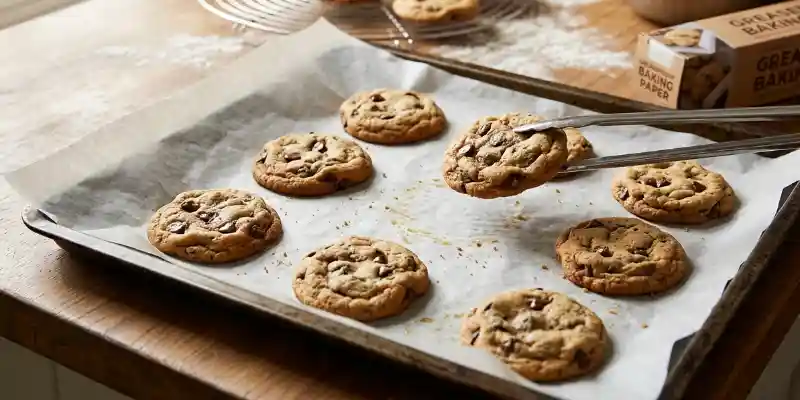
It is used to line the trays for baking cookies and muffins, so they are removed without any hustle from the tray and also hold their shape.
Steaming Chicken And Fish:
As it is heat-resistant, it is often used to steam seasoned fish and chicken by wrapping them. This traps the steam and lets them get cooked in their juices.
Vegetable Roasting:
Vegetables are easily roasted by using this paper, so they don’t get stuck to the paper.
Frozen Food Separator:
This is also used to separate the pieces of frozen items, such as meat for patties, so that they don’t get attached to the paper.
Cooling Dough:
Sometimes, small pieces of dough are separated according to cookie or muffin sizes and baked freshly. This paper is also used to store those pieces.
DIY Piping Bag:
People who bake at home use this paper as a piping bag. It is used for decorating cakes with whipped cream.
Real-life Uses Of Greaseproof Paper
Greaseproof paper is not coated, unlike parchment paper, but it still offers a number of uses in the food business, specialty fast food cafes, and restaurants. The following are the uses of greaseproof paper:
Wrapping Paper:
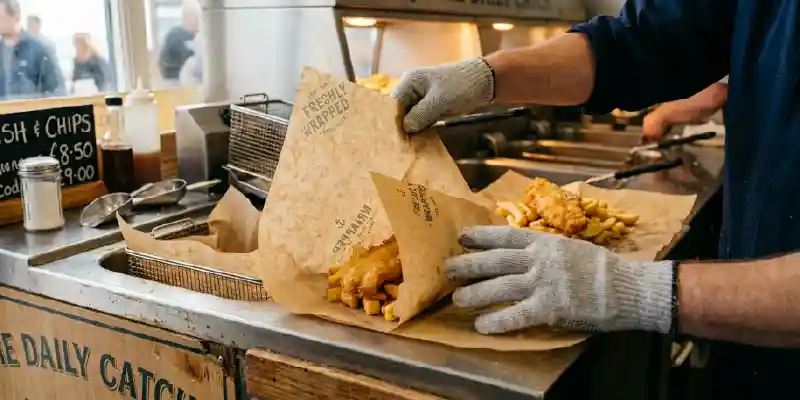
It is used to wrap burgers, wraps, and other oily items to keep them warm and prevent the oil from leaking on the hands of customers.
Lining Baskets:
Many food business owners use custom greaseproof paper to line the trays and baskets in which they serve their food. This serves a dual purpose: protecting the food and increasing brand awareness.
Wrapping Cheese And Butter:
This paper is grease-resistant, so it is used to store oily and grease-based foods. They are used to wrap cheese and butter for storage purposes.
Bakery Packaging:
This is also used as a packaging material for different bakery items such as pastries, croissants, and others.
Surface Protection:
It is often used to lay on the surface when cutting the meat or doing any other mess-creating work.
Crafts:
When doing art and crafts work, this paper is used to protect the surface.
Pan Liner:
Sometimes it is used to line pans for baking, but in order to avoid the items from sticking, the paper is greased with oil.
Limitations Of Both Papers:
Everything has pros and cons, and the same goes for these papers. These can not be used for all purposes. There are certain limitations of both papers:
| Parchment Paper | Greaseproof Paper |
|---|---|
| It is comparatively more expensive because of its silicone coating and specialized manufacturing process. | It may stick to baking trays or food if used for baking without applying oil or grease. |
| It is not ideal for tight food wrapping because the silicone coating creates a slightly slippery surface. | When exposed to excess water or moisture, it can become soft and soggy. |
| It cannot withstand temperatures above approximately 450°F (230°C). | It is not heat-resistant and should not be used for baking or high-temperature cooking. |
What Should You Choose Depending On Your Needs?
Choosing the right option from both papers is essential, as it helps to either promote the business and create ease or make different processes difficult.
We would suggest that if you own a bakery business that needs regular baking and exposure to heat, you should choose parchment paper. The non-stick nature helps save time for staff and decreases food wastage as the food items easy gets removed from the trays, and you don’t need to grease the baking trays with extra oil
However, if you own a food restaurant and cafe that sells burgers, wraps, fries, and sandwiches, you should choose greaseproof paper. This paper provides grease resistance at lower rates. The custom packaging also creates a brand image in the market.
Importance Of Custom Packaging
In today’s competitive world, you cannot ignore the importance of custom and branded packaging. If you use regular packaging, you miss the opportunity to market your brand through mobile advertising. The use of custom parchment paper will help people recognize your brand more. The kitchen and baking paper of your bakery will get more hype, and people will remember your brand’s name if you use custom parchment paper. Custom and branded greaseproof paper is the best for your fast food business, especially in this digital world.
The paper you want to choose depends highly on your needs. But in both cases, customization is really important, as this helps build customers and gain attention on social media. You should choose the best provider and reseller for custom packaging services, such as Custom Grease Paper, and explore different options.