
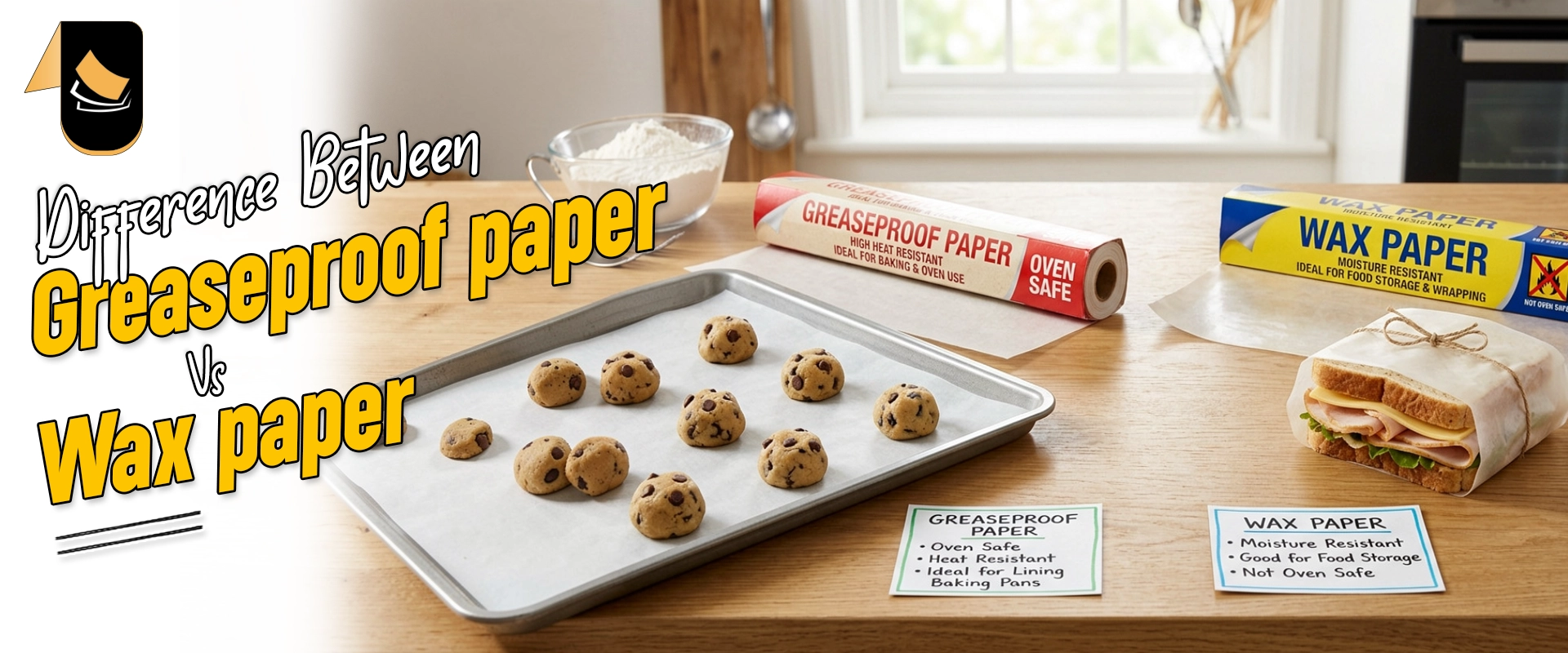
Difference Between Greaseproof Paper vs Wax Paper
You’ve spent hours baking and perfecting that flaky pie crust. But are you wrapping it in the right paper? Are you sure the paper you are choosing will not melt into your food? Don’t you want to stop scrubbing burnt food when you are stuck with messes on your baking sheets?
Remember, one wrong choice could ruin the batch of your baked goods and turn your delight into a greasy mess. If you think all kitchen papers are created equal and choose greaseproof paper or wax paper with the perspective that your creation will bake well, you are wrong. You must understand what these food papers are and how they are a perfect fit for cooking or baking. Not to worry.
This blog will clarify the difference between greaseproof paper vs wax paper to help you learn how the right greaseproof paper can transform your baking and release delicate pastries every single time. Let’s get started!
What Is A Greaseproof Paper?
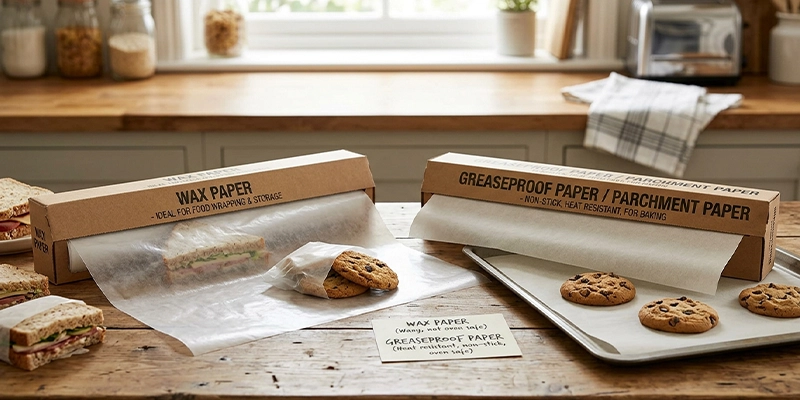
Greaseproof paper is a food-safe paper designed to resist the penetration of oil and fats. It is used for wrapping greasy food or lining baking trays. Creating a dense barrier, this food paper keeps your fatty food fresh and prevents grease from seeping onto your clothes or table. Perfect for:
- Burgers
- Pastries
- Sandwiches
- Fried foods
Benefits Of Greaseproof Paper
When it comes to exploring the pros of greaseproof papers, there are many. Let’s explore them.
Grease Resistant
Withstanding greasy and oily food items, greaseproof paper is ideal for food like bacon or buttery pastries.
Breathability
Uncoated and made from highly compressed wood pulp, greaseproof paper is breathable to provide a low-porosity structure to block oils, allowing air or steam to circulate.
Heat Resistant
Offering high resistance to heat, this paper handles high temperatures without burning and does not catch fire, which makes it a perfect choice for lining baking trays.
Parchment-like Texture
With non-stick properties, greaseproof paper is a perfect choice for baking or wrapping baking pans.
Sustainability
Made from biodegradable material, greaseproof paper is food-grade paper that is easy to decompose after use, which makes it a perfect choice in the food packaging industry and food service businesses.
Uses Of Greaseproof Paper
Far more than a barrier against grease, this specialized baking paper is a breakthrough for passionate home cooks and bustling commercial kitchens. Let’s count its best applications.
- Lining cake pans and baking sheets
- Maintaining the delicious taste of your food
- Separating layers of sticky baked goods
- Wrapping fatty foods
- Cooking seafood in a frying pan
- Tray lining for frozen foods
- Microwaving food
- Packaging food items during delivery
- Upcycling durable pet food packaging into reusable bags and trash liners
- Easy to clean
- Protecting the food surfaces during prep
What Is A Wax Paper?
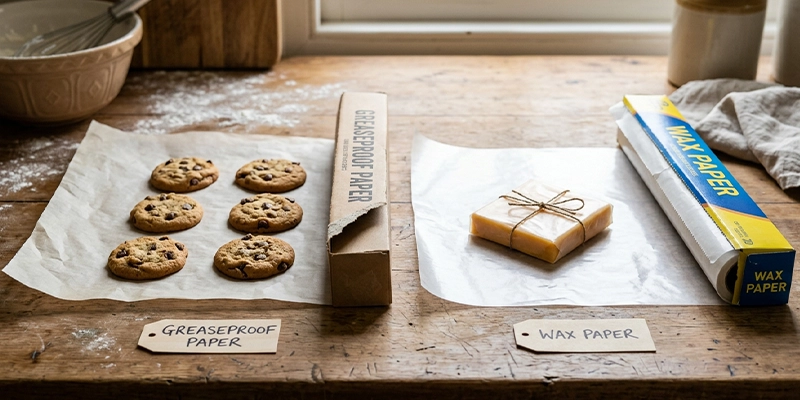
Made from a lightweight kraft paper base and coated on the paper with a thin layer of soybean or paraffin, wax paper is:
- Non-stick
- Moisture resistant
- Grease resistant
This specialized food wrap is an affordable household staple for wrapping non-greasy food and separating items where food sticking is a concern.
Benefits Of Wax Paper
Wax paper is more than a kitchen wrap. Known for its oilproof and moisture-locking properties, this wrapping paper is a versatile choice for household essentials.
Moisture & Grease Resistant
Wax paper blocks moisture and grease seepage while maintaining subtle breathability.
Non-stick
Wax paper is for wrapping and rolling sticky dough without adding extra flour.
Translucent Appearance
A thin wax coating offers a clear appearance of the food that allows customers to view the wrapped content without unwrapping.
Heat-Sensitive
Wax paper is not made for a conventional oven, as it melts at high heat or temperatures.
Uses Of Wax Paper
Whether you are mastering fridge-set dessert recipes or trying to keep your kitchen spotless, wax paper is the one you need to make it happen. Let’s find out how a single sheet of wax paper can solve some of your most frustrating household problems. It is:
- For preserving the freshness of your food
- For protecting food from harmful hazards
- Easy to place between your rolling pin and dough to roll out evenly and prevent sticking
- For lining trays when cooling dipped chocolates or fudges
- Customizable in any shape and design with a printed logo to promote your brand
Differences Of Greaseproof Paper vs Wax Paper
Stop allowing soggy wrapping papers to ruin your perfectly crispy baked goods. The secret to bakery-fresh treats at home isn’t just the recipe—it’s the paper. And when it comes to distinguishing between wax paper and greaseproof paper, it is not a big deal. See the table below to differentiate them.
| Features | Greaseproof Paper | Wax Paper |
|---|---|---|
| Coating Material | Uncoated paper made from densely refined pulp, providing natural grease resistance. | Coated with a thin layer of food-grade paraffin or soy-based wax. |
| Maximum Temperature | Heat-resistant up to approximately 400°F–425°F (204°C–218°C). | Not heat-resistant; the wax coating can melt at high temperatures. |
| Non-Stick Level | High for handling greasy or cold foods. | Low to moderate; some foods may stick during use. |
| Moisture Control | Blocks grease, moisture, and water to keep food and packaging clean. | Allows limited airflow to reduce condensation but offers less moisture protection. |
| Eco-Friendly | Yes, available in recyclable and biodegradable options. | Generally less eco-friendly because of its wax coating. |
| Cost | Slightly more expensive due to its manufacturing process. | More affordable and commonly used for basic food wrapping. |
| Transparency | Semi-translucent with a smooth, natural finish. | More opaque with a waxy texture. |
| Best Uses | Wrapping burgers, sandwiches, pastries, deli items, and lining food baskets or trays. | Cold food storage, wrapping sandwiches, cheese, baked goods, and rolling dough. |
Conclusion
After having detailed information about both food papers, you now understand the real difference between greaseproof paper and wax paper, so you never ruin another batch. Wax paper melts and catches fire in a hot oven. Avoid it. Choose biodegradable greaseproof paper. All the details from the pros to the applications of both papers are clear. Decide which paper is sufficient to meet your needs. Make sure the baking paper does not stick to the food and preserves the quality and freshness without ruining its taste.
Still not sure and want to learn more, or need wax or grease-resistant paper in bulk to fulfill your demands, contact Custom Greaseproof Paper and book your small or big order.