
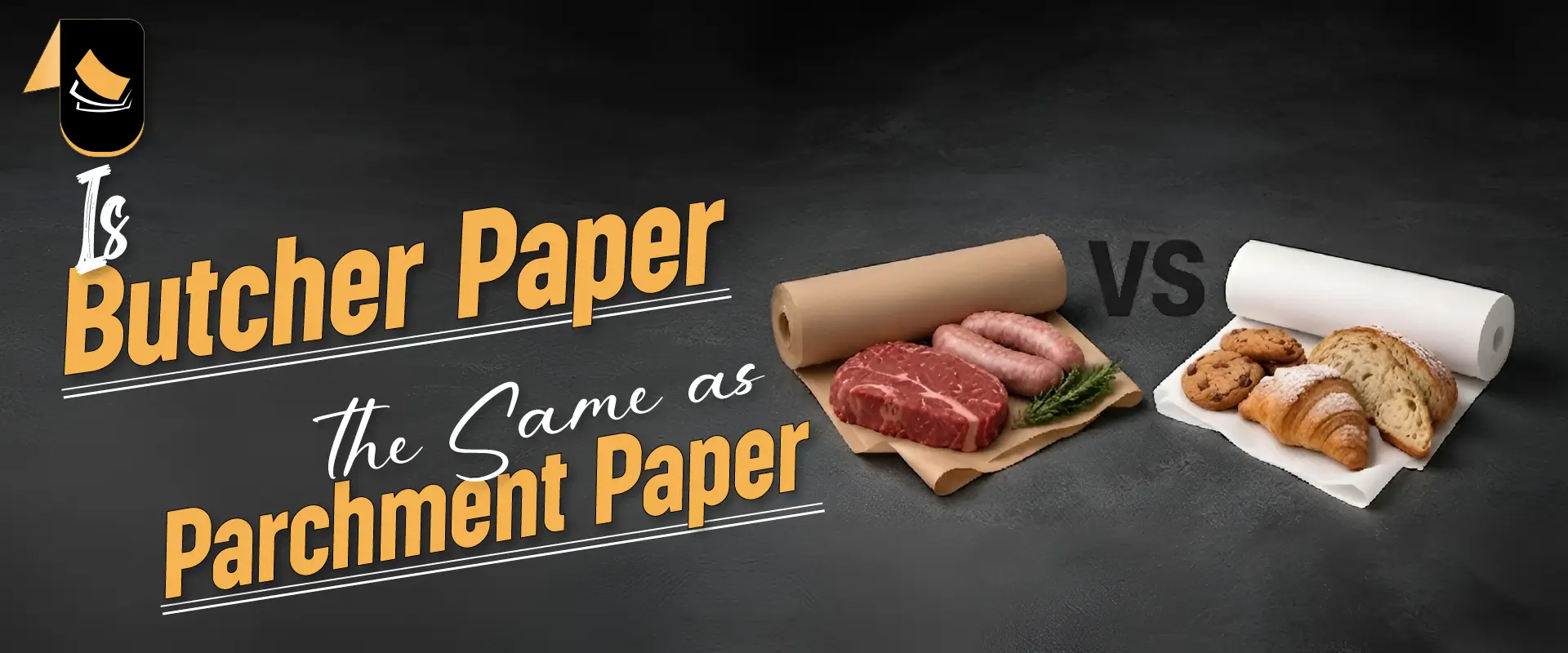
Is Butcher Paper The Same As Parchment Paper?
Butcher paper and Parchment paper are both the most commonly used papers while cooking. The question is, are they the same? Or do they differ from each other? If yes, then how? And how do these differences affect their usage?
If any of these questions ever crossed your mind, you are in the right place. In this blog, we will discuss the detailed answers to all these questions.
Is Butcher Paper The Same As Parchment Paper?
The simple answer to this question is no. Both papers are used in cooking, but they are made to serve entirely different purposes. They differ in their base fibres, coatings, and even in their heat tolerance. Understanding the basic uses and functional differences of both butcher paper and parchment paper is crucial.
Butcher Paper: Ideally used for smoking and storing meat. It is primarily uncoated.
Parchment Paper: Ideally used for baking cakes or pastries. It is also used when making candies. It has a silicone coating.
What Is Butcher Paper?
Butcher paper is a food-safe kraft paper, manufactured specifically to wrap meat or smoke meat. It goes through special kraft pulping, and resins like Polyamide-epichlorohydrin are used to make it wet-safe and highly durable.
- It does not trap steam and prevents food from getting soggy.
- Holds its structure and does not tear even with water or meat blood.
- Made with kraft paper, making it a safe option for food and compostable.
- It is an environmentally friendly option.
- You can get custom butcher paper with a printed logo of your brand.
Different types of butcher paper are available in the market.
Brown Butcher Paper
- Natural unbleached kraft paper
- Basis weight ranges from 40 lb to 50 lb+
- Provides high grease absorption
White Butcher Paper
- Bleached kraft paper
- Pure white surface is ideal for printing
- Basis weight ranges from 30 lb to 40 lb
Pink Butcher Paper
- Unbleached paper with a natural pink tint
- Basis weight ranges from 40 lb to 50 lb
- Maintains the crispiness of bark
What Is Parchment Paper?
This is a baking paper made from a cellulose paper base. It goes through a chemical processing called parchmentization, making the paper fibres denser. The dense paper is coated with a food-safe silicone emulsion, making the paper grease-resistant.
- This paper requires no additional greasing while baking.
- It can easily bear temperatures ranging from 420°F-450°F without burning.
- You can easily reuse this if there are no visible signs of burning.
- Protects against moisture and grease mess
- Bakeries can get custom parchment paper with their brand logos on it.
- You can roll sticky doughs
- It is perfect for lining cakes and cookies
- Unbleached parchment is an environmentally friendly option, as it can be composted at home within 60-90 days.
This paper comes in two basic categories:
Bleached Parchment Paper
- Has a bleached, pure white surface, ideal for custom printing
- Basis weight ranges from 24 lb to 35 lb
Unbleached Parchment Paper
- Has a naturally brown, rustic colour, ideal for breads
- Basis weight ranges from 24 lb to 35 lb
How Is Butcher Paper Different From Parchment Paper
Butcher paper and Parchment paper are made with food-safe materials, but their manufacturing and uses are different. The detailed differences between both papers in terms of their manufacturing, coatings, uses, and heat resistance are given below:
Manufacturing
- Butcher Paper: It is manufactured through a pulping process.
- Parchment Paper: It is manufactured through a parchmentization process.
Surface Coatings
- Butcher Paper: Pure brown and pink butcher papers are entirely uncoated. However, waxed butcher papers are also available in the market. These are used only for cold storage purposes.
- Parchment Paper: A thin layer of silicone is coated on both sides of the paper
Breathibility
- Butcher Paper: It is manufactured with kraft paper that has unsealed fibers that allow air passage. This prevents meat from getting soggy.
- Parchment Paper: The silicone coating creates a barrier. This helps in locking in the moisture.
Heat Resistance
- Butcher Paper: It is designed to cook low and slow. It can resist heat up to 300℉ in temperature.
- Parchment Paper: This is made specifically for baking under relatively high temperatures. It can work perfectly well at temperatures ranging between 420℉ and 450℉.
Grease Resistance
- Butcher Paper: It has no resistance against grease and moisture. Cheese and sticky doughs can easily stick to it. This makes it difficult to release without damaging either the food item or the paper.
- Parchment Paper: It does not stick to anything because of the built-in silicone emulsion. It can be easily used as a liner while baking cakes, making sticky candies, etc, that too without any additional greasing.
Wet-Tear Strength
- Butcher Paper: It has great wet-tear resistance.
- Parchment Paper: Contains moderate wet-tear resistance.
Common Uses
Butcher Paper:
- Smoking Briskets
- Storing Meat
- Wrapping Deli Sandwiches
- Counter Protection
- Table Liners
- Arts And Packaging
Parchment Paper:
- Lining The Baking Pans
- Steam Cooking
- Roasting Different Food Items
- Rolling The Dough
- Lining The Air Fryer
- Separate Frozen Items
- Piping Bag For Icing
- Wrapping Fast Food
- Microwave Food Covers
- Protective Sheets
Can You Swap Them?
Swapping both Butcher Paper with Parchment Paper can be a little risky. Putting butcher paper in the oven can cause a fire hazard, while using parchment for smoking your meat may not cause any such hazard, but it can trap steam.
Using Butcher Paper Instead of Parchment Paper can:
- Allow your baked goods to stick to it.
- It can cause a fire hazard if you use it in the oven. This is because of its inability to bear high temperatures
Using Parchment Paper instead of Butcher Paper can:
- Trap moisture, which is not ideal when smoking meat.
- Make the outside of your bark soggy
If you are looking for any of the two papers in custom designs, you can contact Custom Grease Paper. We are manufacturing all the custom dimensions and premium quality paper at wholesale.