
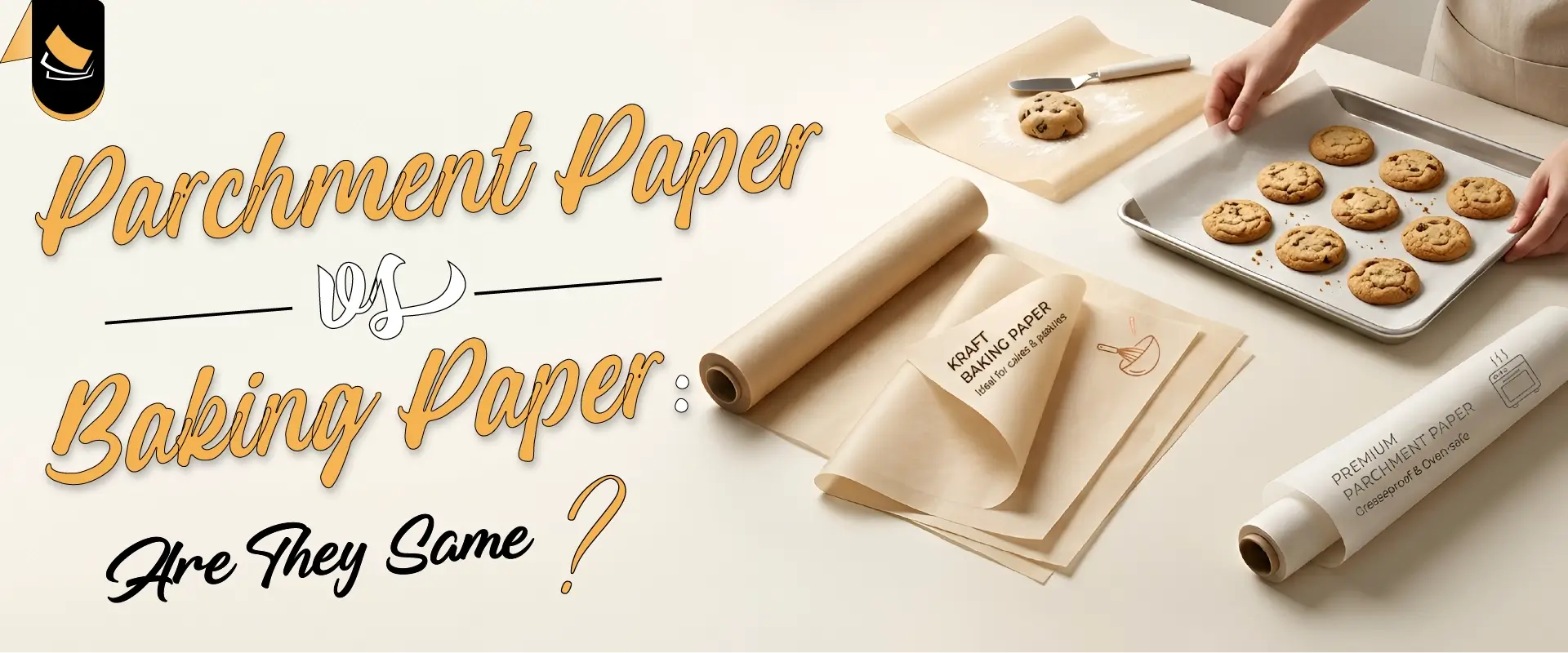
Parchment Paper vs Baking Paper: Are They The Same?
Parchment and baking paper are commonly used in food baking. The right type of paper can improve your cooking experience. Each paper has specific qualities that are best suited for your perfect recipe. Firstly, you must understand the differences between the papers. Secondly, parchment and baking paper depend on your specific requirements.
Parchment paper and baking paper are widely used in the kitchen. Parchment and baking paper are similar but differ in material. In this article, we will discuss the differences and where to use these papers. Keep reading our guide blog to choose the right sheet for your next baking.
What Is A Parchment Sheet?
This paper is compostable and environmentally friendly. Parchment paper does not contain chemicals and is a good option for wrapping. It provides versatility and excellent choice for crafts.
What Is A Baking Sheet?
This sheet is non-stick paper used in baking. It prevents trays from sticking. This sheet is coated with Quilon. This coating makes it less heat-resistant.
How Do These Sheets Differ From Each Other?
Silicone and Quilon sheets look almost the same, but there are many differences between them. We describe all the differences between these sheets
Material
The main difference between silicone and Quilon sheets lies in their material coatings
- The parchment sheet has a silicone coating that gives a non-stick surface. This coating ensures food releases easily. The food paper is repeated in the oven.
- A quilon coated sheet is similar to a parchment sheet. Quilon contains chromium and can degrade at high temperatures.
Paper Type Coating Type Non-Stick Heat Resistance Reusability Environmental Impact Parchment Paper Silicone High Up to 450°F Yes (for some uses) compostable Baking Paper Silicone or Quilon Varies Up to 425° No Some types are non-biodegradable
Heat Resistance
- Parchment paper can be used in an oven at 450°F. It is the best choice for grilling and roasting. For long baking sessions, this paper is the best option.
- Baking paper has a tolerance of 428°F and can smoke or degrade at high temperatures.
Performance In Baking
Silicone and baking sheets have a non-stick surface, but it depends on the coating type:
- A silicone sheet is best for high-sugar baking and sticky dough. It prevents sticking. No need for extra greasing.
- Baking paper has less of a non-stick effect and requires greasing for sticky recipes.
Environmental Impact
Environmental impact plays an important role in the selection of parchment paper and baking paper.
- Silicone-coated parchment paper is biodegradable and the best option for environmentally conscious bakers.
- Quilon paper contains chromium. Due to this coating, baking paper is non-biodegradable.
Parchment is preferable because it provides maximum non-stick properties and is environmentally friendly.
Food Safety Standard
Parchment and baking paper are produced to meet food safety standards and are safe for direct contact with food. Parchment paper is premium due to its coating and does not release harmful chemicals during baking. Baking paper is also a good option for baking. It is affordable but contains chromium in the coating. Professional bakers prefer parchment paper due to its high heat tolerance and chemical free.
When To Use These Papers
Understand when to use parchment paper and baking paper for better baking and food storage. Their coating and suitability vary for different needs.
| Category | Application | Purpose |
|---|---|---|
| Baking | Cookies & Pastries | This sheet prevents sticking and ensures even baking on all sides. |
| Cakes | Line cake pans for effortless release after baking. | |
| Macarons | Maintains delicate shape and structure while preventing sticking on the tray. | |
| Roasting & Cooking | Wrap Food for Roasting | For high-heat roasting. |
| Roast Meat | This sheet serves as a tray liner to stop food from sticking. It keeps meat tender and juicy. | |
| Papillote Cooking | Encloses chicken or fish to trap steam, locking in moisture and intensifying flavours. | |
| Air Fryer & Small Ovens | Withstands high heat, making it a reliable liner for quick, small-batch cooking. | |
| Other Kitchen Uses | DIY Piping Bags | Can be rolled into a cone shape for piping icing. |
| Separating Sticky Food | Placed between sticky foods to prevent them from fusing. | |
| Microwave Mess Guard | Covers food during reheating to shield against messes and splatters. |
Final Thoughts
After reading this blog, you understand the distinctions between parchment paper and baking paper. helps you when you choose to buy these papers. Parchment paper is a higher performer with strong heat and grease resistance. On the other hand, baking paper is affordable and best for general packaging and baking. Choose these papers as per your kitchen needs and performance expectations.
Whether your clients need non-stick solutions for baking and packaging, choosing the right paper ensures quality for customer satisfaction. Grow your business with the best packaging and culinary solutions. With Custom Greaseproof Paper, you are guaranteed quality results for all your culinary creations.
Frequently Asked Questions
Can you print parchment and baking paper?
Printing does not adhere to baking paper, but you can print on parchment paper. You can print on the external side. Flexographic printing is most suitable for parchment paper.
Can you place these papers in the oven?
Yes, these papers are designed for oven use.
Which sheet is ideal for high heat?
The parchment sheet is more suitable for high heat because it withstands heat up to
420 F.
Where can you use baking paper?
Baking paper is suitable for cupcakes, cookies and general baking.