

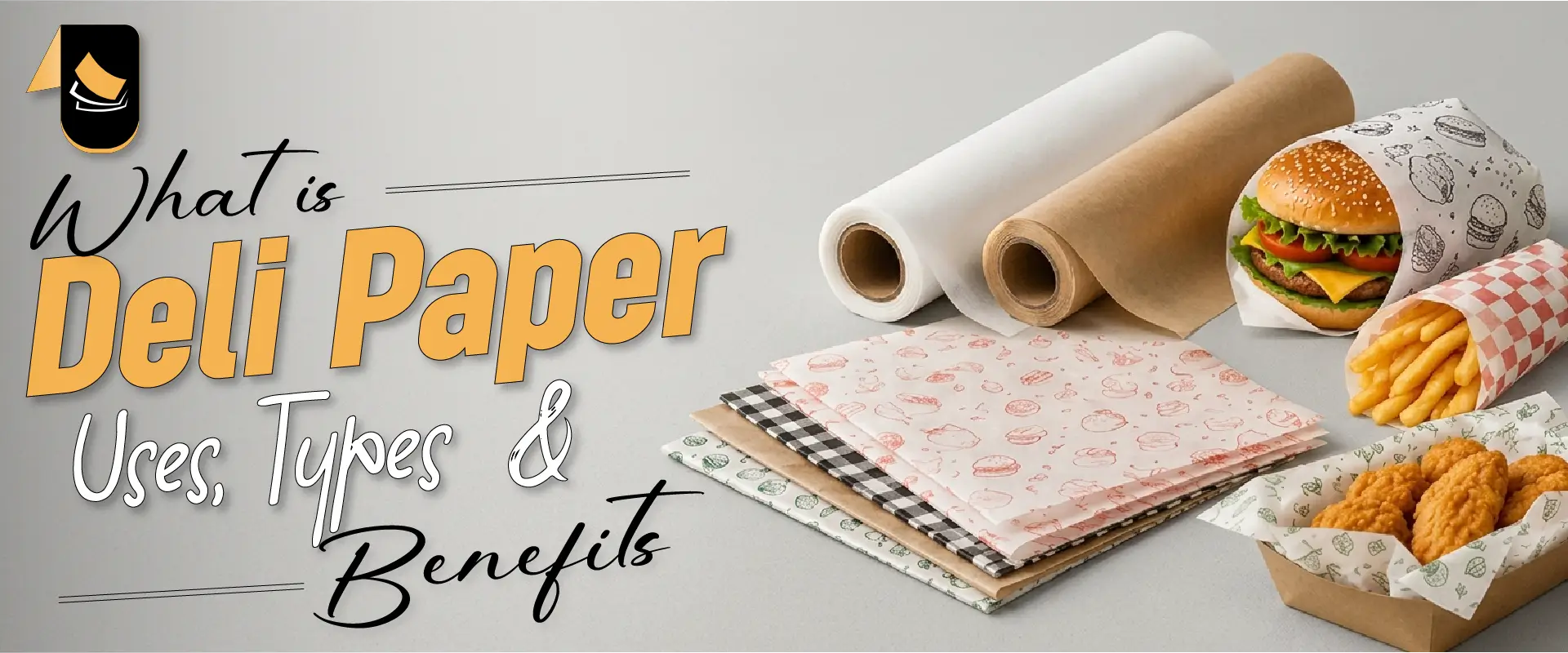
What Is Deli Paper? Uses, Types & Benefits
Food paper is more than a functional way to carry delicious food. It’s an addition to the brand that reflects your commitment to quality. In the food industry, thoughtful packaging is the best way to engage customers, enhance brand visibility, and build loyalty.
The custom food packaging converts traditional wrapping into tolerable packaging that communicates professionalism and elevates consumer satisfaction.
For food businesses, these custom deli papers provide the best balance between functionality and marketing. This paper not only keeps the food fresh but also helps to serve the food on a large canvas that showcases your brand’s logo and name.
If you are new to knowing about the difference between of these packaging papers and want to know about what deli paper is exactly? This blog will clear up all your questions about deli paper. Let’s go inside the blog to understand all the confusion about deli paper
What Is Deli Paper?
Custom deli paper is a thin, grease-resistant food paper that is primarily used to wrap food, line the food tray, or separate deli meats. This paper is highly valued in kitchens because it provides a great barrier against oil and moisture without tearing easily.
Besides the food industry, this paper is also used in crafting materials for techniques like gel plate painting or montages. Like other papers, deli paper is also made with cellulose fibre, which makes it a durable choice to wrap food. This makes fast food sellers fans of this paper when it comes to wrapping their delicious food.
The Uses Of Deli Papers
Deli paper is a multipurpose paper, and its uses are not limited to one sector. From food packaging to textiles and crafts, these papers are used widely because they are affordable and maintainable. Here are the uses of deli paper
Food services
In industrial kitchens and corner stores, these wrapping sheets perform multiple tasks. The main function of the paper is covering ready food like sandwiches and breakfast wraps. This paper works as a barrier for the food to protect the bread from getting soggy. These are used to line food baskets or trays. Also, helps to keep the serving clean and catches drips from greasy foods.
Deli sheets are also used for interleaving individual cheese slices, cold cuts, and burger patties to prevent them from freezing together. These wrapping sheets are also used for wrapping dry bakery foods like doughnuts, muffins, and others. Custom printed sheets are decorated with restaurant themes, logos, or brand names that elevate the food presentation and also work as a cost-effective marketing tool.
Art, Craft And Media Use
Due to its thin and sturdy nature, deli paper is becoming an essential tool for artists and crafters. Artists highly prefer deli paper for gel plate printing because it is thin. As well as durable and absorbs acrylic paints efficiently. This sheet behaves similarly to tissue paper but is far more resistant when it is wet.
When you apply it to canvas with gel medium, the transparent paper blends seamlessly into the background, making an excellent layer for texture and image. Its semi-permeable quality makes it beneficial for sketching.
Types Of Deli Paper
These custom food paper are a thin and versatile paper that is used across food services to wrap items in serving baskets. The term encompasses several specific varieties and is categorised primarily by their coating and material.
Here are the types of deli paper
Dry wax deli paper
The most common variety of the paper; the wax is directly applied into the papers fibre that leaving non sticky surface to residue. This paper is grease-resistant and breathable, allowing the hot steam to escape so sandwiches and burgers do not get soggy.
Wet wax deli paper
This paper features a heavy gloss coating on both sides of the paper that creates a total moisture barrier. It is ideal for refrigerated food, cold cuts, and wet deli items.
Plastic-coated paper
The plain paper is covered with a layer of polythene that provides maximum protection from leaking and excellent resistance to tearing. These sheets are used to line heavy takeout boxes or package juicy wraps.
Greaseproof paper
The greaseproof paper is made from highly refined or dense wood pulp with low porosity that naturally blocks the grease without needing a wax coating, making it highly biodegradable or recyclable.
Benefits Of Deli Papers
Deli paper provides excellent grease resistant and moisture resistant also food preservation, cost-effectiveness, and branding opportunities for the brand along with this its also popular for art and crafts. The benefits of these papers are:
Moisture barrier: These papers are coated with different coatings such as wax-coated or poly-coated, which prevent oil or sauces from dripping through the paper. It also keeps the food looking tasty.
Preserve the food quality: It forms a lamination that helps to maintain the texture of the food during delivery and also keeps the food hot.
Cost-effective: Food wrap is a reasonable and flimsy packaging material. It helps to reduce shipping costs compared to heavy packaging boxes; it also takes up minimal storage space.
Powerful branding tool: Food businesses mostly use custom-printed deli papers manufactured using food-grade vegetable inks for the printing of logos, themes, and brand names. This elevates the presentation of the food, or turns the standard food baskets into professional marketing assets.
Conclusion
Deli paper is not just a wrapping paper. It’s a crucial element in food presentation and in customers’ experience. These custom deli papers are a combination of presentation, sustainability, and marketing. If you need these custom papers, you can get them from Custom Grease Paper at affordable prices. We offer these papers to cover your food with versatile designs and eco-friendly material. So get a quote and place your order now.