
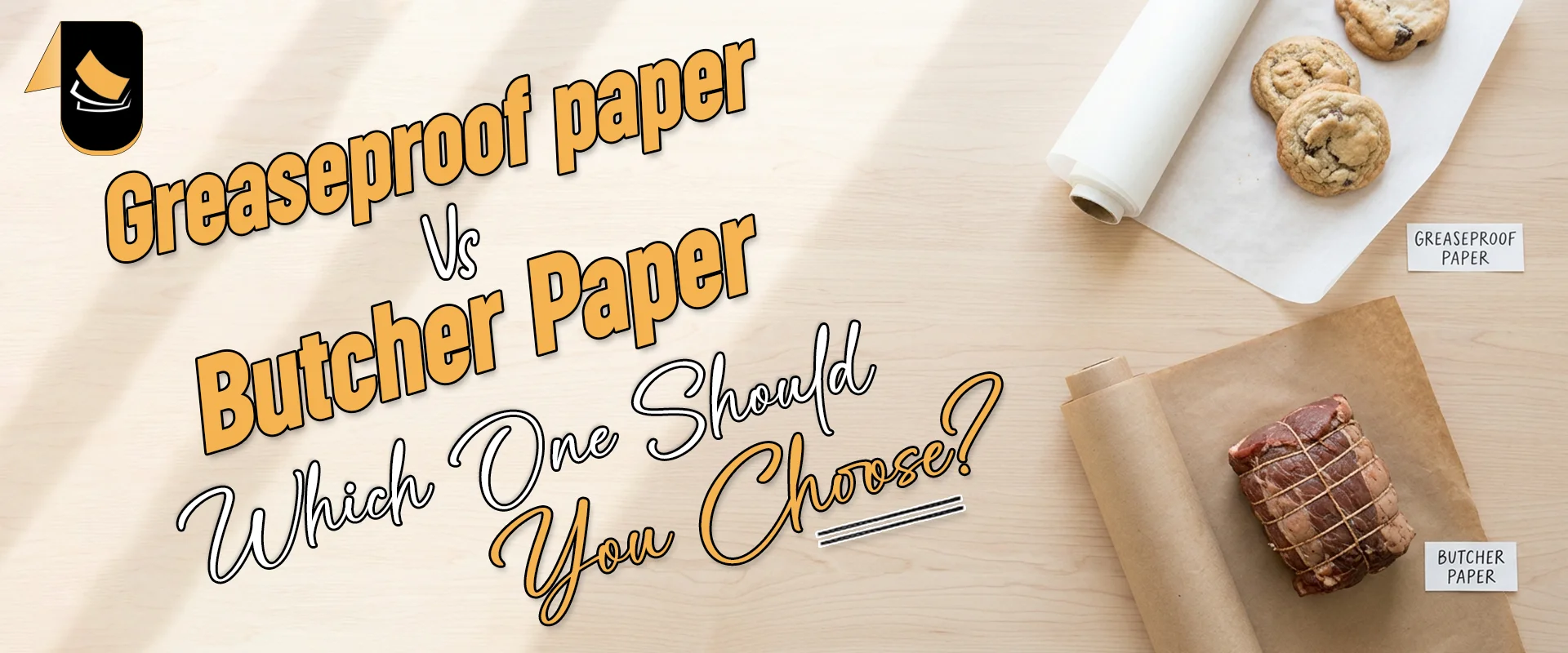
Greaseproof Paper vs Butcher Paper: Which One Should You Choose?
People will judge your business the second they touch your packaging of the product. A leaking burger box instantly destroys customer trust in the brand. Your takeout experience collapses if cooking oil seeps through to a customer’s shirt before they even take a bite. That is the main reason why choosing the right paper wrap is very important for your brand’s product.
Greaseproof paper is specially made to block fat and oil. It also seals out moisture. This is why food businesses use it to wrap greasy items. It keeps the outer packaging of the product clean. Butcher’s paper works on a completely different principle. It is a raw Kraft paper built to handle heavy conditions. That strength allows it to wrap raw meat without ripping apart from blood or moisture.
It ruins food presentation and wastes inventory budget if you select the wrong material. You will be able to choose the right paper for your items after reading this blog. This guide examines the exact physical properties and kitchen workflows behind both options.
What Is Greaseproof Paper and Where Is It Used?
Greaseproof paper acts as a high-density barrier beyond basic wrapping. It’s specially made for modern food businesses. Its tightly compressed fibers stop fat migration naturally. It’s giving food brands an eco-friendly alternative option to the local sheets. Custom greaseproof paper protects items from oil damage and delivers a clean customer experience from counter to doorstep. Have a look below at some common uses of greaseproof paper:
Wrapping High-Fat Foods
Hot fried items and smash burgers dump liquid fat within seconds of packaging. Standard paper absorbs that oil instantly. That makes the wrapper soggy and ruins the delivery bag. Greaseproof paper acts as a solid shield that holds oils inside the main wrap. This keeps takeout bags completely dry during transit.
Wrapping Sensitive Food
Cheeses and meats release oil continuously, and cheap paper absorbs that oil and turns greasy in just a few hours after putting the item in it. Greaseproof paper traps those oils inside the wrap so the paper stays strong. If it stays strong, then our product in it will be safe.
What Is Butcher Paper and Where Is It Used?
A regular paper instantly absorbs moisture and becomes soggy. But that’s not the case with butcher paper. It absorbs heavy fluid gradually and allows a moderate airflow to retain the actual texture of meat.
BBQ Smoke Pits
One of the major reasons Pitmasters use butcher paper is that it does not trap steam like aluminum foil. The breathable nature of the paper allows moderate exchange of steam while retaining the crisp bark of the meat.
Raw Meat Counters
The fresh steaks and the chicken items drip blood nonstop all day long. If you use normal paper to wrap these kinds of items, it turns soggy after one or two hours. Butcher paper absorbs that nonstop dripping blood. It lets air pass through the fibers so the meat keeps that fresh red color of the meat instead of turning gray.
Tray Liners and Table Covers
Busy barbecue spots entirely ditch ceramic plates and directly use butcher paper on the table. This is because butcher paper is thick and does not tear due to heavy knife cuts and dripping sauce. So when dinner ends, the staff just rolls up the whole mess in seconds for an instant cleanup.
Comparison Between Both Of Them
The selection of the paper totally depends on the menu of your brand. The greaseproof paper works best to stop oil leaks on greasy foods. On the other hand, butcher paper works well when you need heavy strength for raw meat and these kinds of items. Here is a quick comparison to help you choose the right type of paper for your items:
| Feature | Greaseproof Paper | Butcher Paper |
| Main Job | Blocks oil and grease | Handles wet strength and vents steam |
| Airflow | Tight seal | High breathability |
| Heat Use | Baking and hot food holding | Long smokes and oven cooking |
| Best For | Burgers, fries, brisket, cheese | Raw meat, BBQ bark, tray liners |
| Print Quality | Crisp white finish for logos | Natural craft look |
Key Factors Before Picking the Paper
The right paper selection saves money and protects your customer experience. Analyzing your kitchen needs stops messy packaging failures before orders are placed for your item. Here are a few points to consider before selecting the paper:
Analyze Your Food Oil Levels
Look closely at your menu items to see what substances they release during service. If your food drops melted butter or frying oil, you need tight greaseproof sheets. If your station deals with raw blood or heavy smoking heat, you need butcher paper instead. Matching packaging chemistry to your actual menu prevents daily operational disasters.
Speed Up Your Kitchen Workflow
Every second counts during a high-volume restaurant rush. Counter service staff need pre-cut greaseproof sheets to bag orders instantly without blundering with dispenser blades. Smokehouse operations need massive butcher rolls to wrap irregular meat cuts all day long. Choosing the right physical format directly reduces prep time and keeps your kitchen line moving smoothly during peak hours.
Match Your Brand Aesthetic
Because the paper will work as a marketing tool for you as well. You can also print a logo on your custom greaseproof paper and butcher paper to make a clean, modern look. Heavy butcher paper delivers that authentic craft vibe people associate with quality slow-cooked food.
Conclusion
Every food business faces a basic choice between blocking oil and letting moisture pass. The proper sheet you choose for your items keeps your business moving fast. It also prevents packaging leaks in front of your trusted customers. Selecting the right paper for your menu is the easiest way to protect your product quality.
Smart packaging choices build strong customer loyalty with every order you deliver. Upgrade your takeaway presentation today with Custom Grease Paper to give your food the professional protection it deserves.